
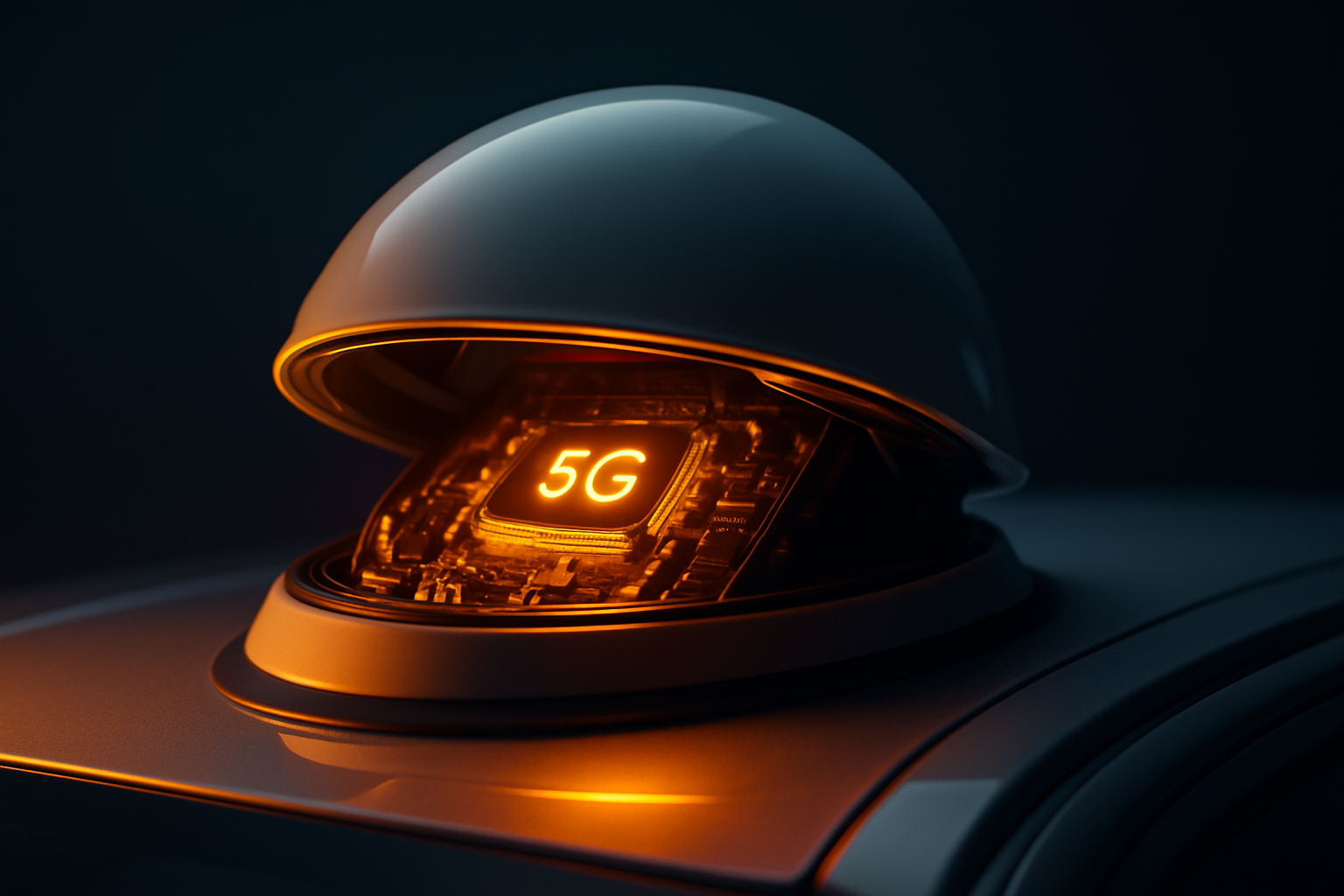
For years the standard way to get cellular into a medical vehicle was a router in a cabinet and long coaxial cables running to antennas on the roof. It worked — badly. Every foot of LMR coax between the modem and the antenna throws away signal.
The hidden tax of coax
A 15-to-30-foot coax run introduces real RF loss on every modem — loss that compounds across a vehicle full of them. It also demands weatherproofing, careful routing, and RF know-how at every install, in a vehicle that vibrates and flexes down the highway. Your expensive 5G modem never gets to run at its potential.
Move the modem, not the signal
The modern design puts a standalone Peplink BR1 Pro 5G inside the roof antenna, inches from the elements. RF loss goes to zero. Each unit connects back to the core router with a single Cat6a ethernet run — no coax, no RF specialist — and the router bonds them all with SpeedFusion.
- Every modem runs at full potential throughput.
- One cable type: ethernet. Installs get simpler and cheaper.
- Scale by adding another antenna-modem — not by re-planning coax.
It is a small architectural change with an outsized result: more usable bandwidth, cleaner builds, and a template you can replicate across a whole fleet.
If your disaster-recovery plan includes the word “failover,” you’re doing it wrong.
SpeedFusion internet bonding means increased performance, more uptime, and no failover — because the session was already riding every link.
Own your network. Peplink hardware is bought once and it lasts — it keeps bonding and routing with or without an active warranty or the cloud. No forced subscriptions, no required licenses.
Learn the fundamentals at connectivity101.com.
Leave a Reply